
Autobiographies Of Indian Leaders
Bhagat Singh
Born: September 27, 1907
Passed Away: March 23, 1931
Contributions
 Bhagat
Singh was among the prominent revolutionaries who shaped the base of a
grand national movement. Following his execution, on March 23, 1931, the
supporters and followers of Bhagat Singh regarded him as a "Shaheed",
"martyr".
Bhagat
Singh was among the prominent revolutionaries who shaped the base of a
grand national movement. Following his execution, on March 23, 1931, the
supporters and followers of Bhagat Singh regarded him as a "Shaheed",
"martyr".
Life
Bhagat Singh was born on 27 September 1907 at Banga in Lyallpur district (now Pakistan) to Kishan Singh and Vidya Vati. From his early childhood, Bhagat Singh was imbued with the family's spirit of patriotism. At the time of his birth, his father Kishan Singh was in jail. His uncle, Sardar Ajit Singh, was a great freedom fighter and established the Indian Patriots' Association. He was well-supported by his friend Syed Haidar Raza, in organizing the peasants against the Chenab Canal Colony Bill. Ajit Singh had 22 cases against him and was forced to flee to Iran. Bhagat Singh was considered to be one of the most influential revolutionaries of Indian Nationalist Movement. He became involved with numerous revolutionary organizations.
Kishan Singh enrolled Bhagat Singh in Dayanand Anglo Vedic High School. At a very young age, Bhagat Singh started following Non-Cooperation Movement called by Mahatma Gandhi. Bhagat Singh had openly defied the British and had followed Gandhi's wishes by burning the government-sponsored books. Following the violent incidents of "Chauri Chaura", Gandhi called for the withdrawal of the Non-Cooperation movement. Unhappy with the decision, Bhagat Singh, isolated himself from Gandhi's nonviolent action and joined the Young Revolutionary Movement.
He was pursuing B.A. examination when his parents planned to have him married. He vehemently rejected the suggestion and said that, if his marriage was to take place in Slave-India, my bride shall be only death." Singh later joined the Hindustan Republican Association, a radical group, later known as the Hindustan Socialist Republican Association. He returned to his home in Lahore after assurances from his parents that he would not be compelled to get married. He established contact with the members of the Kirti Kisan Party and started contributing regularly to its magazine, the "Kirti". In March 1926, the Naujawan Bharat Sabha was formed with Bhagat Singh, as its secretary.
On 30 October 1928, an all-parties procession, led by Lala Lajpat Rai, marched towards the Lahore railway station to protest against the arrival of the Simon Commission. Stopping the procession, police made a lathi charge at the activists. The confrontation left Lala Lajpat Rai with severe injuries and also led to his death. As an avenge to the death of Lala Lajpat Rai, Bhagat Singh and his associates plotted the assassination of Scott, the Superintendent of Police, believed to have ordered the lathi charge. The revolutionaries, mistaking J.P. Saunders, an Assistant Superintendent of Police, as Scott, killed him instead. Bhagat Singh quickly left Lahore to escape his arrest. To avoid recognition, he shaved his beard and cut his hair, a violation of the sacred tenets of Sikhism.
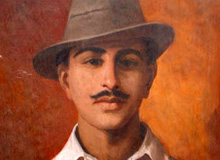
In response to the formulation of Defence of India Act, the Hindustan Socialist Republican Association planned to explode a bomb inside the assembly premises, where the ordinance was going to be passed. On April 8 1929 Bhagat Singh and Batukeshwar Dutt threw a bomb onto the corridors of the assembly and shouted 'Inquilab Zindabad!' The bomb was not meant to kill or injure anyone and therefore it was thrown away from the crowded place. Following the blasts both Bhagat Singh and Batukeshwar Dutt courted arrest
Trial and Death
The British authority, while interrogating them, came to know about their involvement in the murder of J. P. Saunders. Bhagat Singh, Rajguru, and Sukhdev were charged with the murder. Singh admitted to the murder and made statements against the British rule during the trial.
While in jail, Bhagat Singh found that the authorities were following a dual policy in treating the prisoners. The criminals of foreign origin were treated better than Indian political prisoners. As a protest, he along with some fellow prisoners declared to "go on hunger strike". The strike continued for over a month and finally the British had to accept before their conditions.
Bhagat Singh along with other revolutionaries found responsible for the Assembly bombing and murder of Saunders. On March 23, 1931, Bhagat Singh was hanged in Lahore with his fellow comrades Rajguru and Sukhdev. Singh was cremated at Hussainiwala on banks of Sutlej river.
Passed Away: March 23, 1931
Contributions
Bhagat
Singh was among the prominent revolutionaries who shaped the base of a
grand national movement. Following his execution, on March 23, 1931, the
supporters and followers of Bhagat Singh regarded him as a "Shaheed",
"martyr". Life
Bhagat Singh was born on 27 September 1907 at Banga in Lyallpur district (now Pakistan) to Kishan Singh and Vidya Vati. From his early childhood, Bhagat Singh was imbued with the family's spirit of patriotism. At the time of his birth, his father Kishan Singh was in jail. His uncle, Sardar Ajit Singh, was a great freedom fighter and established the Indian Patriots' Association. He was well-supported by his friend Syed Haidar Raza, in organizing the peasants against the Chenab Canal Colony Bill. Ajit Singh had 22 cases against him and was forced to flee to Iran. Bhagat Singh was considered to be one of the most influential revolutionaries of Indian Nationalist Movement. He became involved with numerous revolutionary organizations.
Kishan Singh enrolled Bhagat Singh in Dayanand Anglo Vedic High School. At a very young age, Bhagat Singh started following Non-Cooperation Movement called by Mahatma Gandhi. Bhagat Singh had openly defied the British and had followed Gandhi's wishes by burning the government-sponsored books. Following the violent incidents of "Chauri Chaura", Gandhi called for the withdrawal of the Non-Cooperation movement. Unhappy with the decision, Bhagat Singh, isolated himself from Gandhi's nonviolent action and joined the Young Revolutionary Movement.
He was pursuing B.A. examination when his parents planned to have him married. He vehemently rejected the suggestion and said that, if his marriage was to take place in Slave-India, my bride shall be only death." Singh later joined the Hindustan Republican Association, a radical group, later known as the Hindustan Socialist Republican Association. He returned to his home in Lahore after assurances from his parents that he would not be compelled to get married. He established contact with the members of the Kirti Kisan Party and started contributing regularly to its magazine, the "Kirti". In March 1926, the Naujawan Bharat Sabha was formed with Bhagat Singh, as its secretary.
On 30 October 1928, an all-parties procession, led by Lala Lajpat Rai, marched towards the Lahore railway station to protest against the arrival of the Simon Commission. Stopping the procession, police made a lathi charge at the activists. The confrontation left Lala Lajpat Rai with severe injuries and also led to his death. As an avenge to the death of Lala Lajpat Rai, Bhagat Singh and his associates plotted the assassination of Scott, the Superintendent of Police, believed to have ordered the lathi charge. The revolutionaries, mistaking J.P. Saunders, an Assistant Superintendent of Police, as Scott, killed him instead. Bhagat Singh quickly left Lahore to escape his arrest. To avoid recognition, he shaved his beard and cut his hair, a violation of the sacred tenets of Sikhism.
In response to the formulation of Defence of India Act, the Hindustan Socialist Republican Association planned to explode a bomb inside the assembly premises, where the ordinance was going to be passed. On April 8 1929 Bhagat Singh and Batukeshwar Dutt threw a bomb onto the corridors of the assembly and shouted 'Inquilab Zindabad!' The bomb was not meant to kill or injure anyone and therefore it was thrown away from the crowded place. Following the blasts both Bhagat Singh and Batukeshwar Dutt courted arrest
Trial and Death
The British authority, while interrogating them, came to know about their involvement in the murder of J. P. Saunders. Bhagat Singh, Rajguru, and Sukhdev were charged with the murder. Singh admitted to the murder and made statements against the British rule during the trial.
While in jail, Bhagat Singh found that the authorities were following a dual policy in treating the prisoners. The criminals of foreign origin were treated better than Indian political prisoners. As a protest, he along with some fellow prisoners declared to "go on hunger strike". The strike continued for over a month and finally the British had to accept before their conditions.
Bhagat Singh along with other revolutionaries found responsible for the Assembly bombing and murder of Saunders. On March 23, 1931, Bhagat Singh was hanged in Lahore with his fellow comrades Rajguru and Sukhdev. Singh was cremated at Hussainiwala on banks of Sutlej river.
Bal Gangadhar Tilak
Born: 23 July 1856
Passed Away: 1 August 1920
Contributions
 Bal
Gangadhar Tilak was a social reformer and freedom fighter. He was one of
the prime architects of modern India and strongest advocates of Swaraj
(Self Rule). He was universally recognized as the "Father of Indian
Movement". Tilak was a brilliant politician as well as a profound
scholar who believed that independence is the foremost necessity for the
well being of a nation.
Bal
Gangadhar Tilak was a social reformer and freedom fighter. He was one of
the prime architects of modern India and strongest advocates of Swaraj
(Self Rule). He was universally recognized as the "Father of Indian
Movement". Tilak was a brilliant politician as well as a profound
scholar who believed that independence is the foremost necessity for the
well being of a nation.
Life: Bal Gangadhar Tilak was born on July 22, 1856 in a middle class family in Ratnagiri, a small coastal town in southwestern Maharashtra. Tilak's father, Gangadhar Shastri, was a noted Sanskrit scholar and school teacher at Ratnagiri. His mother's name was Paravti Bai Gangadhar. In 1886, following his father's transfer, the entire family shifted to Poona.
Tilak was a brilliant student and also very good in mathematics. Since his childhood, Tilak had an intolerant attitude towards injustice and he was truthful and straightforward in nature. Though, he was among the India's first generation of youth to receive a modern, college education Tilak was a critic of the educational system, the British had provided for the Indians. According to him, the education was not at all adequate. After graduating from Deccan College, Pune in 1877, Tilak also cleared the L.L.B. from the Elphinston College, Mumbai. Later, he helped found a school that laid emphasis on nationalism.
Social Reforms
After completing his education, Tilak spurned the lucrative offers of government service and decided to devote himself to the larger cause of national awakening. He was a great reformer and throughout his life he emphasized on the concepts of women education and women empowerment. Tilak educated all of his daughters and did not marry them till they were over 16. To inspire a sense of unity, he introduced the festivals like 'Ganesh Chaturthi' and Shivaji Jayanti'. Today, Ganesh Chaturthi is considered as the prime festival of the Marathis. It is a sheer tragedy that for his allegiance towards extremism, Tilak and his contribution were not given the recognition, he actually deserved.
Newspapers
Towards his goal, Bal Gangadhar Tilak launched two newspapers called 'Mahratta' (English) and 'Kesari' (Marathi). Both the newspaper stressed on making the Indians aware of the glorious past and empowered them to be self reliant. In other words, the newspaper actively propagated the cause of national freedom.
In 1896, When the entire nation was gripped by the famine and plague, the British government declared that there was no cause for anxiety. The government also rejected the need to start a 'Famine Relief Fund'. The attitude of the government was severely criticized by both the newspapers. Tilak fearlessly published reports about the havoc caused by famine and plague and government's utter irresponsibility and indifference.
Extremism
 Bal
Gangadhar Tilak joined the Indian National Congress Party in 1890.
Realizing that the constitutional agitation in itself was futile against
the British, Tilak opposed the moderate views of the party. This
subsequently made him stand against the prominent leaders like Gopal
Krishna Gokhale. He was waiting for an armed revolt to broom-away the
British. His movement was based on the principles of Swadeshi
(Indigenous), Boycott and Education. But his methods also raised bitter
controversies within the Indian National Congress Party and the movement
itself.
Bal
Gangadhar Tilak joined the Indian National Congress Party in 1890.
Realizing that the constitutional agitation in itself was futile against
the British, Tilak opposed the moderate views of the party. This
subsequently made him stand against the prominent leaders like Gopal
Krishna Gokhale. He was waiting for an armed revolt to broom-away the
British. His movement was based on the principles of Swadeshi
(Indigenous), Boycott and Education. But his methods also raised bitter
controversies within the Indian National Congress Party and the movement
itself.
As a result, Tilak formed the extremist wing of Indian National Congress Party. Tilak was well supported by fellow nationalists Bipin Chandra Pal in Bengal and Lala Lajpat Rai in Punjab. The trio was referred to as the Lal-Bal-Pal. A massive trouble broke out between the moderate and extremist factions of the Indian National Congress Party in the 1907 session of the Congress Party. As a result of which, the Congress split into two factions.
During 1908-1914, Bal Gangadhar Tilak spent six years rigorous imprisonment in Mandalay Jail, Burma. He was deported because of his alleged support to the Indian revolutionaries, who had killed some British people. Following his growing fame and popularity, the British government also tried to stop the publication of his newspapers. His wife died in Pune while he was languishing in Mandalay prison.
Tilak returned to India in 1915 when the political situation was fast changing under the shadow of World War I. There was unprecedented jubilation in India after Tilak was free and back in India. After seeing such a grand welcome, Tilak decided to re-unite with his fellow nationalists and founded the All India Home Rule League in 1916 with Joseph Baptista, Annie Besant and Muhammad Ali Jinnah.
Death
Tilak was so disappointed by the brutal incident of Jalianwala Bagh massacre that his health started declining. Despite his illness, Tilak issued a call to the Indians not to stop their movement no matter what happened. He was raring to lead the movement but his health did not permit that. Tilak had become very weak by this time. In mid-July 1920, his condition worsened and on August 1, he passed away.
Even as this sad news was spreading, a veritable ocean of people surged to his house. Over 2 lakh people gathered at his residence in Bombay (now, Mumbai) to have the last glimpse of their beloved leader.
Passed Away: 1 August 1920
Contributions
Bal
Gangadhar Tilak was a social reformer and freedom fighter. He was one of
the prime architects of modern India and strongest advocates of Swaraj
(Self Rule). He was universally recognized as the "Father of Indian
Movement". Tilak was a brilliant politician as well as a profound
scholar who believed that independence is the foremost necessity for the
well being of a nation. Life: Bal Gangadhar Tilak was born on July 22, 1856 in a middle class family in Ratnagiri, a small coastal town in southwestern Maharashtra. Tilak's father, Gangadhar Shastri, was a noted Sanskrit scholar and school teacher at Ratnagiri. His mother's name was Paravti Bai Gangadhar. In 1886, following his father's transfer, the entire family shifted to Poona.
Tilak was a brilliant student and also very good in mathematics. Since his childhood, Tilak had an intolerant attitude towards injustice and he was truthful and straightforward in nature. Though, he was among the India's first generation of youth to receive a modern, college education Tilak was a critic of the educational system, the British had provided for the Indians. According to him, the education was not at all adequate. After graduating from Deccan College, Pune in 1877, Tilak also cleared the L.L.B. from the Elphinston College, Mumbai. Later, he helped found a school that laid emphasis on nationalism.
Social Reforms
After completing his education, Tilak spurned the lucrative offers of government service and decided to devote himself to the larger cause of national awakening. He was a great reformer and throughout his life he emphasized on the concepts of women education and women empowerment. Tilak educated all of his daughters and did not marry them till they were over 16. To inspire a sense of unity, he introduced the festivals like 'Ganesh Chaturthi' and Shivaji Jayanti'. Today, Ganesh Chaturthi is considered as the prime festival of the Marathis. It is a sheer tragedy that for his allegiance towards extremism, Tilak and his contribution were not given the recognition, he actually deserved.
Newspapers
Towards his goal, Bal Gangadhar Tilak launched two newspapers called 'Mahratta' (English) and 'Kesari' (Marathi). Both the newspaper stressed on making the Indians aware of the glorious past and empowered them to be self reliant. In other words, the newspaper actively propagated the cause of national freedom.
In 1896, When the entire nation was gripped by the famine and plague, the British government declared that there was no cause for anxiety. The government also rejected the need to start a 'Famine Relief Fund'. The attitude of the government was severely criticized by both the newspapers. Tilak fearlessly published reports about the havoc caused by famine and plague and government's utter irresponsibility and indifference.
Extremism
Bal
Gangadhar Tilak joined the Indian National Congress Party in 1890.
Realizing that the constitutional agitation in itself was futile against
the British, Tilak opposed the moderate views of the party. This
subsequently made him stand against the prominent leaders like Gopal
Krishna Gokhale. He was waiting for an armed revolt to broom-away the
British. His movement was based on the principles of Swadeshi
(Indigenous), Boycott and Education. But his methods also raised bitter
controversies within the Indian National Congress Party and the movement
itself. As a result, Tilak formed the extremist wing of Indian National Congress Party. Tilak was well supported by fellow nationalists Bipin Chandra Pal in Bengal and Lala Lajpat Rai in Punjab. The trio was referred to as the Lal-Bal-Pal. A massive trouble broke out between the moderate and extremist factions of the Indian National Congress Party in the 1907 session of the Congress Party. As a result of which, the Congress split into two factions.
During 1908-1914, Bal Gangadhar Tilak spent six years rigorous imprisonment in Mandalay Jail, Burma. He was deported because of his alleged support to the Indian revolutionaries, who had killed some British people. Following his growing fame and popularity, the British government also tried to stop the publication of his newspapers. His wife died in Pune while he was languishing in Mandalay prison.
Tilak returned to India in 1915 when the political situation was fast changing under the shadow of World War I. There was unprecedented jubilation in India after Tilak was free and back in India. After seeing such a grand welcome, Tilak decided to re-unite with his fellow nationalists and founded the All India Home Rule League in 1916 with Joseph Baptista, Annie Besant and Muhammad Ali Jinnah.
Death
Tilak was so disappointed by the brutal incident of Jalianwala Bagh massacre that his health started declining. Despite his illness, Tilak issued a call to the Indians not to stop their movement no matter what happened. He was raring to lead the movement but his health did not permit that. Tilak had become very weak by this time. In mid-July 1920, his condition worsened and on August 1, he passed away.
Even as this sad news was spreading, a veritable ocean of people surged to his house. Over 2 lakh people gathered at his residence in Bombay (now, Mumbai) to have the last glimpse of their beloved leader.
Chandrasekhar Azad
Born: July 23, 1906
Passed Away: February 27, 1931
Contributions
 A
contemporary of Bhagat Singh, Chandrasekhar Azad was a born firebrand
revolutionary. He engaged in a heroic battle against the British. His
role was crucial in inspiring the others of his generation to
participate in the national movement for freedom.
A
contemporary of Bhagat Singh, Chandrasekhar Azad was a born firebrand
revolutionary. He engaged in a heroic battle against the British. His
role was crucial in inspiring the others of his generation to
participate in the national movement for freedom.
Life
Chandrasekhar Azad was born to Pandit Sita Ram Tiwari and Jagrani Devi on July 23, 1906 in Badarka (Unnao). His original name was Chandrasekhar Tiwari.
He received his early schooling in Bhavra District in Jhabua, Madhya Pradesh. For higher studies he went to the Sanskrit Pathashala at Varanasi. Chandrashekhar was deeply troubled by the Jalianwalabagh massacre in Amritsar in 1919. Azad, at an age of 15, got involved in the revolutionary activities. He was caught by the British police while participating in the non-cooperation movement and sentenced to. whiplashes as punishment. When the magistrate asked him his name, he said "Azad" (independence). From that point onwards, Chandrashekhar assumed the title of Azad and came to be known as Chandrashekhar Azad.
Following the Chauri-Chaura incident, in which police stations were vandalized and burnt by the activists, Mahatma Gandhi called for the suspension of the non-cooperation movement. Azad, along with Bhagat Singh distanced themselves from the paths of Gandhi. They were more attracted by the aggressive and violent revolutionary ideals and means. Towards this end, they formed the Hindustan Socialist Republican Association and trained the revolutionaries like Bhagat Singh, Sukhdev, Batukeshwar Dutt, and Rajguru. Azad was instrumental in carrying out numerous acts of violence. This includes the Kakori Train Robbery in 1926, assassination of John Poyantz Saunders in 1928 at Lahore to avenge the killing of Lala Lajpat Rai.
How important his role was in the freedom struggle of India can be understood by the fact that the British police badly wanted to nab him dead or alive. On February 27, 1931 Chandrashekhar Azad while meeting with friends at Alfred Park, Allahabad, and the police surrounded the park and asked Chandrashekhar Azad to surrender. Azad fought alone and valiantly and killed three policemen but after nearly exhausting his ammunition and foreseeing no means of escape, he shot himself in the head with his last bullet. He was reportedly betrayed by an informer.
After the independence, to commemorate Chandrashekhar Azad, Alfred Park was renamed Chandrashekhar Azad Park. The patriotism of Azad, Rajguru, Pandit Ram Prasad Basil and Ashfaqula Khan was depicted in Rang De Besant, a contemporary Bollywood film starring Aimer Khan that was released in February 2006.
Passed Away: February 27, 1931
Contributions
A
contemporary of Bhagat Singh, Chandrasekhar Azad was a born firebrand
revolutionary. He engaged in a heroic battle against the British. His
role was crucial in inspiring the others of his generation to
participate in the national movement for freedom.Life
Chandrasekhar Azad was born to Pandit Sita Ram Tiwari and Jagrani Devi on July 23, 1906 in Badarka (Unnao). His original name was Chandrasekhar Tiwari.
He received his early schooling in Bhavra District in Jhabua, Madhya Pradesh. For higher studies he went to the Sanskrit Pathashala at Varanasi. Chandrashekhar was deeply troubled by the Jalianwalabagh massacre in Amritsar in 1919. Azad, at an age of 15, got involved in the revolutionary activities. He was caught by the British police while participating in the non-cooperation movement and sentenced to. whiplashes as punishment. When the magistrate asked him his name, he said "Azad" (independence). From that point onwards, Chandrashekhar assumed the title of Azad and came to be known as Chandrashekhar Azad.
Following the Chauri-Chaura incident, in which police stations were vandalized and burnt by the activists, Mahatma Gandhi called for the suspension of the non-cooperation movement. Azad, along with Bhagat Singh distanced themselves from the paths of Gandhi. They were more attracted by the aggressive and violent revolutionary ideals and means. Towards this end, they formed the Hindustan Socialist Republican Association and trained the revolutionaries like Bhagat Singh, Sukhdev, Batukeshwar Dutt, and Rajguru. Azad was instrumental in carrying out numerous acts of violence. This includes the Kakori Train Robbery in 1926, assassination of John Poyantz Saunders in 1928 at Lahore to avenge the killing of Lala Lajpat Rai.
How important his role was in the freedom struggle of India can be understood by the fact that the British police badly wanted to nab him dead or alive. On February 27, 1931 Chandrashekhar Azad while meeting with friends at Alfred Park, Allahabad, and the police surrounded the park and asked Chandrashekhar Azad to surrender. Azad fought alone and valiantly and killed three policemen but after nearly exhausting his ammunition and foreseeing no means of escape, he shot himself in the head with his last bullet. He was reportedly betrayed by an informer.
After the independence, to commemorate Chandrashekhar Azad, Alfred Park was renamed Chandrashekhar Azad Park. The patriotism of Azad, Rajguru, Pandit Ram Prasad Basil and Ashfaqula Khan was depicted in Rang De Besant, a contemporary Bollywood film starring Aimer Khan that was released in February 2006.
Dr. Rajendra Prasad
Born: December 3, 1884
Passed Away: February 28, 1963
Contributions
 Rajendra
Prasad was a great leader of the Indian Nationalist Movement and also
one of the architects of the Indian Constitution. He was elected as the
first President of Republic of India. Rajendra Prasad was a crucial
leader of the Indian Independence Movement, who left his lucrative
profession to participate in the nationalist movement of India. He was
also awarded with Bharat Ratna, India's highest civilian award. on 28
February, 1963, following a brief illness, the great soul passed away.
Rajendra
Prasad was a great leader of the Indian Nationalist Movement and also
one of the architects of the Indian Constitution. He was elected as the
first President of Republic of India. Rajendra Prasad was a crucial
leader of the Indian Independence Movement, who left his lucrative
profession to participate in the nationalist movement of India. He was
also awarded with Bharat Ratna, India's highest civilian award. on 28
February, 1963, following a brief illness, the great soul passed away.
Life
Dr. Rajendra Prasad was born into a big joint family of Mahadev Sahay in the Siwan district of Bihar, near Chhapra. His father, Mahadev Sahay was a scholar of Persian and Sanskrit language while his mother Kamleshwari Devi was a religious lady.
When Rajendra Prasad was five years old, his parents put him under a Maulavi learn Persian language followed by Hindi and arithmetic. After the completion of traditional elementary education, Rajendra Prasad was sent to the Chhapra District School. At the age of 12, Rajendra Prasad was married to Rajavanshi Devi. He, along with his elder brother Mahendra Prasad, then went on to study at R.K. Ghosh's Academy in Patna. Mahendra was eight years older than him.
Since childhood, Rajendra Prasad was a brilliant student. He stood first in the entrance examination to the University of Calcutta and was awarded Rs.30 per month as scholarship. In 1902, Rajendra Prasad joined the Presidency College. He was initially a student of science and his teachers included J.C.Bose and Prafulla Chandra Roy. Later he decided to switch his focus to the arts. Prasad lived with his brother in the Eden Hindu Hostel. A plaque still commemorates his stay in that room. Dr. Rajendra Prasad was instrumental in the formation of the Bihari Students' Conference in 1908. It was the first organization of its kind in the whole of India. The move produced the entire political leadership of the twenties in Bihar
In 1915, Rajendra Prasad passed with a Gold medal in Masters in Law examination with honors. He then went on to complete his Doctorate in Law. Rajendra Prasad used to practice his Law & studies at Bhagalpur in Bihar and eventually emerged as a popular and eminent figure of the entire region. In 1916, Rajendra Prasad joined the High Court of Bihar and Orissa. Such was his intellect and his integrity, that often when his adversary failed to cite a precedent, the judges asked Rajendra Prasad to cite a precedent against himself.
Nationalist Movement
 In
1911, during his stay in Calcutta (now Kolkata) as a legal practitioner,
Rajendra Prasad joined the Indian National Congress Party and was
subsequently elected to the AICC. During the Champaran movement, Mahatma
Gandhi asked Rajendra Prasad to visit Champaran along with the other
volunteers and partisans of the Indian National Congress. Initially
Rajendra Prasad was not impressed with Gandhiji's appearance and
conversation but deeply moved by the dedication, conviction and courage
of Gandhi.
In
1911, during his stay in Calcutta (now Kolkata) as a legal practitioner,
Rajendra Prasad joined the Indian National Congress Party and was
subsequently elected to the AICC. During the Champaran movement, Mahatma
Gandhi asked Rajendra Prasad to visit Champaran along with the other
volunteers and partisans of the Indian National Congress. Initially
Rajendra Prasad was not impressed with Gandhiji's appearance and
conversation but deeply moved by the dedication, conviction and courage
of Gandhi.
Rajendra Prasad also responded to the call of Mahatma Gandhi to boycott Western education. He asked his son Mrityunjaya Prasad, a brilliant student to leave the University and enroll himself in Bihar Vidyapeeth. He would write articles for magazines like "Searchlight" and "Desh". When the earthquake of Bihar occurred on January 15, 1934, Rajendra Prasad was in jail. He was released two days later. He set himself for the task of raising funds and collected over Rs 38 Lakhs. Nationalist India expressed its admiration by electing Rajendra Prasad as the President of the Bombay session of the Indian National Congress Party in October 1934.
In July 1946, when the Constituent Assembly was established to frame the Constitution of India, Dr. Rajendra Prasad was elected its President. And, eventually he was also elected as the first President of Republic of India. Unfortunately, on the night of 25 January 1950, a day before the Republic Day of India, his sister Bhagwati Devi passed away. He set about the cremation but only after his return from the parade ground.
Death
In September 1962, Rajendra Prasad's wife Rajavanshi Devi passed away. The incident helped in the deterioration of his health and after suffering from brief illness for around six months on February 28, 1963, Dr. Prasad expired. Rajendra Prasad spent the last few months of his life in retirement at the Sadaqat Ashram in Patna. Rajendra Prasad was awarded with "Bharat Ratna", the nation's highest civilian award.
Passed Away: February 28, 1963
Contributions
Rajendra
Prasad was a great leader of the Indian Nationalist Movement and also
one of the architects of the Indian Constitution. He was elected as the
first President of Republic of India. Rajendra Prasad was a crucial
leader of the Indian Independence Movement, who left his lucrative
profession to participate in the nationalist movement of India. He was
also awarded with Bharat Ratna, India's highest civilian award. on 28
February, 1963, following a brief illness, the great soul passed away.Life
Dr. Rajendra Prasad was born into a big joint family of Mahadev Sahay in the Siwan district of Bihar, near Chhapra. His father, Mahadev Sahay was a scholar of Persian and Sanskrit language while his mother Kamleshwari Devi was a religious lady.
When Rajendra Prasad was five years old, his parents put him under a Maulavi learn Persian language followed by Hindi and arithmetic. After the completion of traditional elementary education, Rajendra Prasad was sent to the Chhapra District School. At the age of 12, Rajendra Prasad was married to Rajavanshi Devi. He, along with his elder brother Mahendra Prasad, then went on to study at R.K. Ghosh's Academy in Patna. Mahendra was eight years older than him.
Since childhood, Rajendra Prasad was a brilliant student. He stood first in the entrance examination to the University of Calcutta and was awarded Rs.30 per month as scholarship. In 1902, Rajendra Prasad joined the Presidency College. He was initially a student of science and his teachers included J.C.Bose and Prafulla Chandra Roy. Later he decided to switch his focus to the arts. Prasad lived with his brother in the Eden Hindu Hostel. A plaque still commemorates his stay in that room. Dr. Rajendra Prasad was instrumental in the formation of the Bihari Students' Conference in 1908. It was the first organization of its kind in the whole of India. The move produced the entire political leadership of the twenties in Bihar
In 1915, Rajendra Prasad passed with a Gold medal in Masters in Law examination with honors. He then went on to complete his Doctorate in Law. Rajendra Prasad used to practice his Law & studies at Bhagalpur in Bihar and eventually emerged as a popular and eminent figure of the entire region. In 1916, Rajendra Prasad joined the High Court of Bihar and Orissa. Such was his intellect and his integrity, that often when his adversary failed to cite a precedent, the judges asked Rajendra Prasad to cite a precedent against himself.
Nationalist Movement
In
1911, during his stay in Calcutta (now Kolkata) as a legal practitioner,
Rajendra Prasad joined the Indian National Congress Party and was
subsequently elected to the AICC. During the Champaran movement, Mahatma
Gandhi asked Rajendra Prasad to visit Champaran along with the other
volunteers and partisans of the Indian National Congress. Initially
Rajendra Prasad was not impressed with Gandhiji's appearance and
conversation but deeply moved by the dedication, conviction and courage
of Gandhi.Rajendra Prasad also responded to the call of Mahatma Gandhi to boycott Western education. He asked his son Mrityunjaya Prasad, a brilliant student to leave the University and enroll himself in Bihar Vidyapeeth. He would write articles for magazines like "Searchlight" and "Desh". When the earthquake of Bihar occurred on January 15, 1934, Rajendra Prasad was in jail. He was released two days later. He set himself for the task of raising funds and collected over Rs 38 Lakhs. Nationalist India expressed its admiration by electing Rajendra Prasad as the President of the Bombay session of the Indian National Congress Party in October 1934.
In July 1946, when the Constituent Assembly was established to frame the Constitution of India, Dr. Rajendra Prasad was elected its President. And, eventually he was also elected as the first President of Republic of India. Unfortunately, on the night of 25 January 1950, a day before the Republic Day of India, his sister Bhagwati Devi passed away. He set about the cremation but only after his return from the parade ground.
Death
In September 1962, Rajendra Prasad's wife Rajavanshi Devi passed away. The incident helped in the deterioration of his health and after suffering from brief illness for around six months on February 28, 1963, Dr. Prasad expired. Rajendra Prasad spent the last few months of his life in retirement at the Sadaqat Ashram in Patna. Rajendra Prasad was awarded with "Bharat Ratna", the nation's highest civilian award.

No comments:
Post a Comment